Urban News & Lifestyle — Listen Free 🎧 | Contact 📧
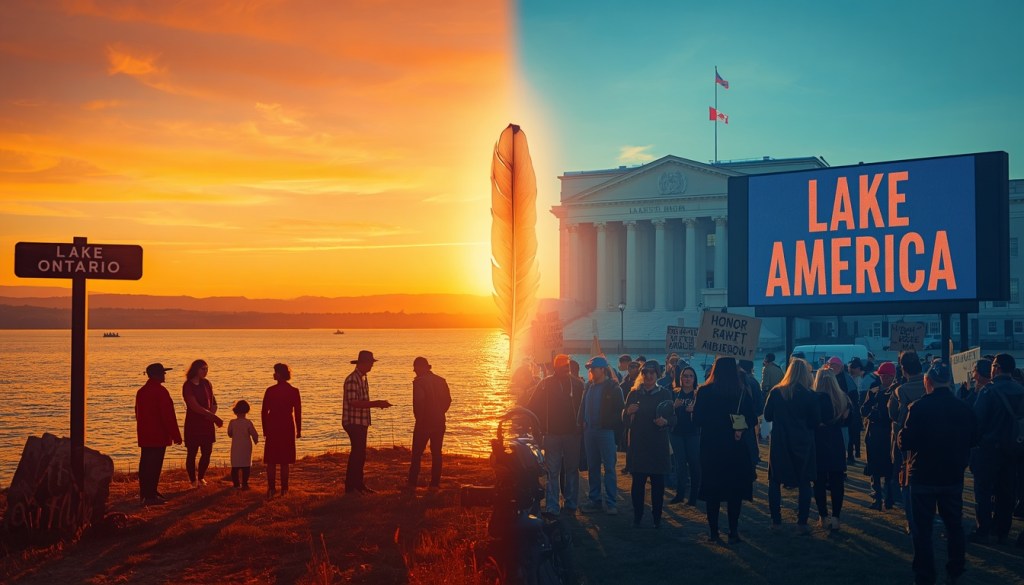
President Trump’s executive order renaming Lake Ontario to “Lake America” has drawn sharp criticism from the Wyandotte Nation, whose Chief Billy Friend called the move an act of “forced removal and erasure” of Indigenous history.
“It’s not about politics; it’s about history. It’s about respecting a tribal name and the people whose language gave that name to the lake.”
— Billy Friend, Chief of the Wyandotte Nation
The History of the Name “Ontario”
The name “Ontario” comes from the Wendat (Huron) language, Ontari’io, which translates to “the lake is big” or “the lake is beautiful.” The Wyandotte people — also known as the Huron — were the original inhabitants of the region before being forcibly displaced.
The Wyandotte Nation, now headquartered in northeast Oklahoma, has deep ancestral ties to the Great Lakes region. The name of the lake itself is a direct connection to their heritage—a living memorial to the people who lived there for centuries before European settlement.
Chief Friend emphasized that the renaming disregards the Indigenous peoples who named the land long before colonial powers arrived. He called the executive order “another act of forced removal and erasure.”
The Executive Order
Trump’s executive order claims to “restore names that honor American greatness.” The order, which also targeted other geographic features, is part of a broader effort to rename landmarks in the name of nationalism.
Under the order, federal agencies are directed to update maps, signage, and official documents to reflect the new name. The move bypasses the U.S. Board on Geographic Names, which typically oversees such changes through a process that includes consultation with local communities and tribal nations.
Tribal Leaders Respond
Chief Friend was not alone in his criticism. Indigenous leaders across the Great Lakes region have condemned the renaming as a dismissal of tribal sovereignty and a denial of the history of the land.
“Our people have lived along these shores for thousands of years. Our language gave this lake its name. To erase that is to erase us.”
— Indigenous leaders (collective statement)
The Wyandotte Nation has called on the administration to rescind the order and engage in meaningful consultation with tribal nations before making decisions that affect their cultural heritage.
A Pattern of Erasure
The renaming of Lake Ontario is part of a broader pattern of erasing Indigenous history and place names. Across the country, tribal nations have fought to preserve or reclaim names that reflect their heritage—from Mount McKinley to Denali, from squaw to Indigenous women.
For Indigenous peoples, place names are not just labels—they are stories, histories, and connections to the land. Changing them without consultation is an act of cultural violence.
Why It Matters for Urban Communities:
The debate highlights the ongoing tension between honoring America’s Indigenous heritage and the impulse to rename landmarks in the name of nationalism. It also raises questions about the role of executive power in unilaterally changing names with deep cultural and historical significance.
The Bottom Line
President Trump’s executive order renaming Lake Ontario to “Lake America” has drawn sharp criticism from the Wyandotte Nation and Indigenous leaders across the region. Chief Billy Friend called it an act of “forced removal and erasure”—a denial of the history of the land and the people who named it.
For urban communities, the debate is a reminder that the land we live on has a history that predates the United States—and that honoring that history is a fundamental act of respect.
The People’s Weekly — urban intel from a holistic social approach.
[ai]
 The People's Weekly
Leave a comment