Finance & Investing — Listen Free 🎧 | Contact 📧
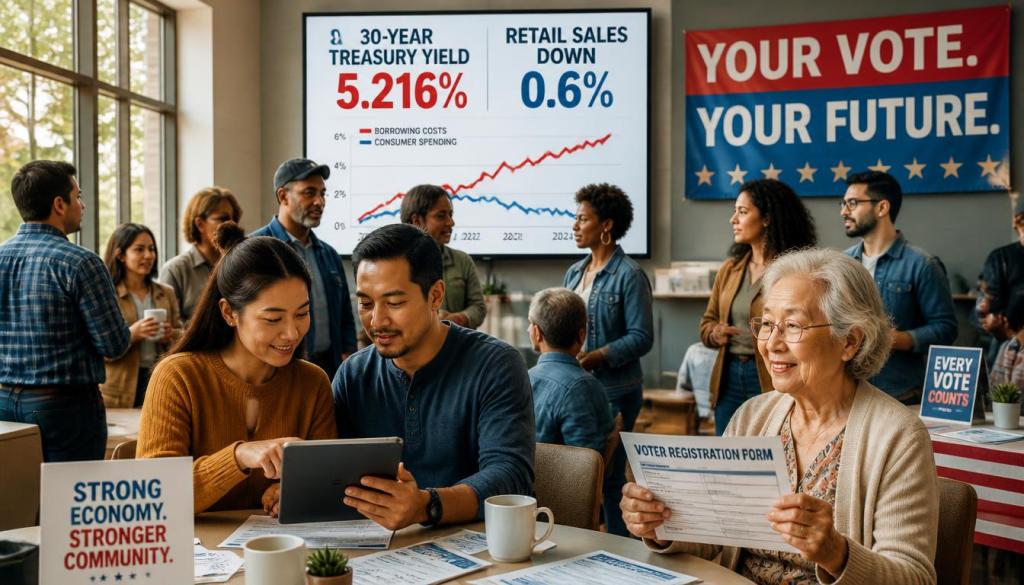
The cost of long-term U.S. borrowing just hit a level not seen in a quarter-century. On Thursday, the Treasury Department auctioned $25 billion in 30-year bonds at a yield of 5.216% — the highest since 2001. The 10-year auction the day before yielded 4.683%, the highest since the 2007 financial crisis.
For working families, higher Treasury yields mean higher borrowing costs — for mortgages, auto loans, credit cards, and small business financing. And with the midterms less than 80 days away, the economy remains the number one issue on voters’ minds.
The Bond Market: A Quarter-Century High
The 30-year auction on Thursday marked the fourth consecutive month that yields have remained above 5.0%. The yield jumped 15.8 basis points from the previous month’s 5.058%, reflecting investor demand for higher compensation amid growing concerns over the U.S. budget deficit, inflation, and geopolitical uncertainty.
The auction drew a bid-to-cover ratio of 2.39, indicating average demand. But the borrowing rate itself tells the story: the U.S. government is now paying its highest long-term borrowing cost in a quarter-century.
Why it matters: Rising Treasury yields ripple through the entire economy. Mortgage rates, auto loans, credit card rates, and small business financing all move in the same direction. For working families, higher yields mean higher monthly payments — and less money for groceries, gas, and savings.
Retail Sales: A Sharp Slowdown
On Friday, the Commerce Department reported that U.S. retail sales fell 0.6% in July — the sharpest decline since May 2025. The drop was significantly worse than the 0.1% increase economists had expected.
Key takeaways from the report:
- Retail sales fell 0.6% from June, the biggest drop in more than a year
- Core retail sales — which exclude autos, gasoline, building materials, and food services — fell 0.4%
- Sales at non-store retailers (online shopping) saw a pullback, partly tied to an early Amazon Prime Day event pulled forward to June
- The decline suggests consumer spending lost momentum after a strong first half of the year
Why it matters: Consumer spending drives roughly two-thirds of U.S. economic activity. A sharp pullback in retail sales raises concerns about the strength of the broader economy — and could weigh on third-quarter GDP growth.
Wall Street: S&P 500 Pulls Back From Record High
Stocks slipped on Friday as investors weighed the weak retail sales data and ongoing Middle East tensions. The S&P 500 had hit an intraday record high of 7,816.70 on Thursday and closed at an all-time high, but pulled back modestly as profit-taking and disappointing economic data weighed on sentiment.
Key market moves:
- The S&P 500 ended the week with its third straight weekly gain
- The index remained near record levels, drifting around its all-time high
- Tech stocks led the pullback as investors rotated out of high-growth names
Why it matters: The stock market’s resilience — even in the face of weak economic data — reflects the tug-of-war between optimism about AI-driven growth and concerns about inflation, the Iran war, and consumer spending.
Reddit Joins the S&P 500
In a notable development, S&P Dow Jones Indices announced that Reddit (RDDT) will join the S&P 500 index before the opening bell on August 18, replacing AvalonBay Communities.
Shares of the social media platform jumped more than 12% in after-hours trading following the announcement. The stock surged to approximately $177.80 per share.
Why it matters: Inclusion in the S&P 500 is a significant milestone for any company, often leading to increased demand from index funds and ETFs that track the benchmark. For Reddit, which went public in March 2024, it’s a validation of the platform’s growth and influence.
Tariff Refunds: A Hidden Boost to GDP
One under-discussed factor supporting the economy: tariff refunds. The Trump administration has been refunding tariffs collected before the Supreme Court invalidated many of the duties.
According to Apollo’s analysis of the Atlanta Fed’s GDPNow model, which currently points to 4.3% growth this quarter, roughly 0.2 percentage points of that growth come from tariff refunds.
Why it matters: Tariff refunds are providing a temporary boost to both corporate earnings and GDP growth. Apple disclosed that the tariff refunds it received boosted its earnings per share by 11 cents in the most recent quarter. For working families, however, the refunds are a reminder that tariffs ultimately raised prices on consumers — and the refunds are going to companies, not households.
The Bottom Line
The bond market is sending a warning: persistent inflation, swelling deficits, and geopolitical turmoil are driving borrowing costs to levels not seen since the 2007 financial crisis. The 30-year Treasury auction yielded 5.216% — the highest since 2001.
Retail sales fell 0.6% in July, raising concerns about consumer spending and economic growth. The S&P 500 pulled back from record highs but still posted its third straight weekly gain. Reddit is joining the S&P 500. And tariff refunds are providing a temporary boost to GDP.
For working families, the stakes couldn’t be higher. Higher Treasury yields mean higher borrowing costs — for mortgages, auto loans, credit cards, and small business financing. And with the midterms less than 80 days away, the economy remains the number one issue on voters’ minds.
Sources
CNBC TV18: “US 30-year bond yield hits highest level since Treasury ended bond in 2001” (August 14, 2026)
Yonhap Infomax: “US 30-Year Treasury Yields Hit Highest Since 2001 at Auction” (August 14, 2026)
CNBC TV18: “Costliest US bond sale since 2001 is investor warning to Bessent” (August 14, 2026)
Fortune: “The U.S. just paid its highest 30-year borrowing cost since 2001” (August 14, 2026)
Bloomberg: “Costliest US Bond Sale Since ’01 Is Investor Warning to Bessent” (August 13, 2026)
Commercial Times: “US 10-Year Treasury Auction Yield Surges to Multi-Year High” (August 14, 2026)
Xinhua Finance: “US July retail sales weaken across the board, Q3 GDP faces downward pressure” (August 14, 2026)
ABC News: “US retail sales unexpectedly post largest drop in more than a year” (August 14, 2026)
PrimeXBT: “Tech stocks pull S&P 500 off record high as retail sales miss, Middle East tensions weigh” (August 14, 2026)
NASDAQ: “Profit Taking, Disappointing Data Contribute To Modest Pullback On Wall Street” (August 14, 2026)
Reuters: “Reddit surges on S&P 500 inclusion, set to replace AvalonBay” (August 14, 2026)
Apollo: “Tariff Refunds Boosting Growth” (August 15, 2026)
The People’s Weekly — urban intel from a holistic social approach.
[ai]
 The People's Weekly
Leave a comment