Urban Lifestyle — Listen Free 🎧 | Contact 📧
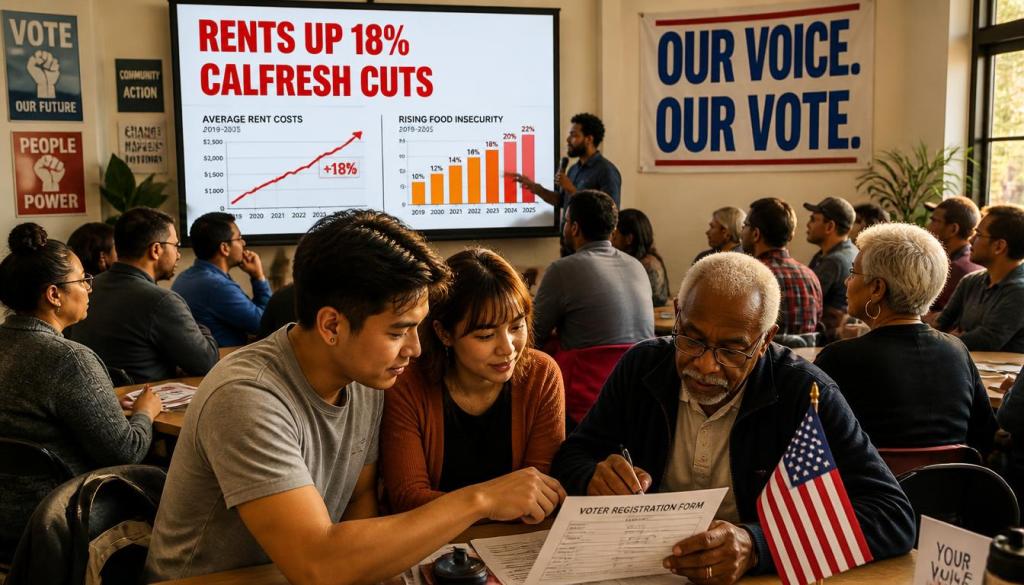
San Francisco has reclaimed its title as the most expensive U.S. rental market. The city’s average asking rent has climbed 18 percent in less than two years to $3,728 a month — surpassing New York City for the first time since 2019 as AI-driven salaries collide with a chronic housing shortage.
The apartment vacancy rate in the metro area fell to 3.7 percent in the second quarter from 4.9 percent a year earlier, the lowest for any major U.S. market outside New York and San Jose. Rents in the most competitive neighborhoods run twice the metro average, with bidding wars pushing some units into five‑figure territory. Mission Bay, where OpenAI has offices, and SoMa, home to Anthropic, are seeing the fastest rent growth.
The Human Cost of the AI Boom
The competition has produced extraordinary — and painful — scenes.
Darren Mallot, 23, a UCLA graduate who moved to San Francisco for a finance job, won a Nob Hill four‑bedroom after bidding escalated from $8,000 to $10,000 a month. “I was honestly prepared for me to say, ‘OK, we’ll pay $10,000,’ and for her to call back and say, ‘Will you do $10,200?’” he told Edgen.
Jaya Gupta, 28, a partner at a venture‑capital firm, offered three months’ rent in cash upfront for a $10,000‑a‑month two‑bedroom in a luxury building. She lost to an employee at one of the big AI labs who paid for the entire year.
Lily Mastrangelo, 22, a recent University of San Francisco graduate, saw an outdated two‑bedroom listed at $4,800 a month. The landlord sent a mass text saying there was an offer for $6,300. A broker advised her to split from her planned roommate: in this market, it is every tenant for herself. She ultimately found a sublet in Russian Hill — $2,520 a month for a bedroom and private bath in a 67‑year‑old woman’s house with two cats.
Some residents have paid $1,500 over asking to secure a place. Landlords have started offering buyouts to tenants in rent‑controlled apartments, and rent increases are spreading to Oakland and San Jose.
The Supply Crunch
New apartment construction in San Francisco lags other big coastal cities. In the Marina District, plans to build an 800‑unit apartment tower have divided residents, reflecting the slow pace of California’s housing reform movement.
The result is a market where listings can disappear within hours of being posted and rents for the most competitive places can jump by hundreds of dollars in a day or two as landlords seize the moment.
The squeeze reflects a structural mismatch: Bay Area venture‑capital fundraising is up, San Francisco has recorded the highest increase in job postings of any major apartment market this year, and new construction lags far behind coastal peers such as Seattle and New York. With AI companies continuing to sign office leases and attract top salaries, the rental market shows no signs of cooling.
The pandemic‑era reprieve is over. Asking rents across the metro area fell more than 7 percent during 2020 as remote workers fled cities, and they stayed at or below pre‑pandemic levels until last year. That changed as the remote‑work era faded and AI companies based in the city went into hiring mode.
National Rent Trends: A Tale of Two Cities
While San Francisco dominates the headlines, the rent crisis is national.
Miami and Los Angeles are almost tied, with average rents of $2,770 and $2,755 respectively as of August 2026 — both far above the national average of $1,763. Los Angeles carries the higher overall cost of living, sitting well above the national average.
State averages tell the story of regional disparity:
- New York: $3,750
- Massachusetts: $3,167
- Hawaii: $3,200
- California: $2,704
- Colorado: $2,146
- New Jersey: $2,000+
As of August 2026, the median rent for a one‑bedroom in San Francisco stands at $3,750, and $4,444 for a two‑bedroom. Seattle’s median rent is $2,083 — 50.1 percent higher than the national average.
The Food Insecurity Crisis: CalFresh Cuts Devastate Communities
While tech workers bid up rents, families across California are struggling to put food on the table.
Since the Trump administration passed the One Big Beautiful Bill Act (H.R. 1) on July 4, 2025, the federal Supplemental Nutrition Assistance Program — known as CalFresh in California — has faced some of its largest funding cuts in history.. The bill, a budget measure that outlines federal spending, cut funding for SNAP and included provisions that eliminated CalFresh eligibility for most lawfully present immigrants beginning April 1, 2026. The changes also expanded work requirements for recipients.
The Impact on L.A. Families:
At the Central Avenue Farmers Market in South Los Angeles, vendors say most customers rely on CalFresh benefits. When ICE raids rattled the community about a year ago, market organizers moved the weekly market to a private courtyard — a hidden, cramped enclosure fenced off from the sidewalk.
Alejandro Corona, the market manager, remembers the incident that forced the move: “There was a lady actually coming out from the bus, she just walked down, and they took her. Our customers were not feeling safe”.
Now the market is back in the open, with colorful bilingual signs advertising federal nutrition benefits. But the challenges persist. While ICE raids aren’t as rampant as a year ago, the community faces new threats from federal spending cuts.
The spending priorities are clear: ICE now has access to roughly $85 billion, making it the highest‑funded federal law enforcement agency in the country. That figure comes from a combination of the agency’s roughly $10 billion base budget and a massive supplemental appropriation in the One Big Beautiful Bill Act — while nutrition assistance for families struggling to put food on the table is being slashed.
Bay Area Food Banks Sound the Alarm:
Bay Area charities are sounding the alarm on a dire situation many families are facing amid higher food prices and cuts to government benefits. “The need is tremendous,” said Deborah Dorton, director of a food pantry program at True Vines Baptist Church in San Jose. “There’s a lot of people that are struggling, a lot of people that don’t have enough food. Our crowd is getting bigger and bigger and bigger.”
Many local nonprofits say there is no light at the end of the tunnel when it comes to trying to meet the demand for food assistance.
National Food Insecurity:
- Texas: More than 6 million Texans are food insecure, a number that has increased about 11% from the previous year. In the Dallas-Fort Worth area, that number has grown to nearly 1.4 million people. Texas has led the nation in food insecurity for the third consecutive year. One in four children in the Dallas-Fort Worth area live in households that don’t always know where their next meal is coming from.
- Connecticut: More than 560,000 Connecticut residents are food insecure, according to a study highlighted by Connecticut Foodshare. The state’s food insecurity rate has climbed to about 15%, up 7% from last year. That means one in every seven individuals and one in every five children don’t know where their next meal is coming from.
- Missouri: In Missouri, 12.7% of households face food insecurity and are unable to provide adequate food for one or more household members. Additionally, one in ten Missourians do not have access to nutritious food.
The Urban Squeeze: What It Means for Working Families
The convergence of rising rents, food insecurity, and stagnant wages is creating an impossible squeeze for urban families.
The rent burden — spending more than 30 percent of income on housing — is no longer the exception. It’s the rule. In cities like San Francisco, New York, and Miami, housing alone can consume 40 to 50 percent of take‑home pay.
The food burden — very‑low‑income households spend 33 percent of their budget on food, according to federal survey data. When both housing and food eat up more than 70 percent of income, there is no room for savings, emergencies, or opportunity.
The result: A generation stuck in what the Federal Reserve calls “shared living arrangements” — adult children with parents, older parents with adult children, friends, and roommates. The American dream of homeownership is slipping away for millions.
The Bottom Line
San Francisco’s AI‑driven rent surge is a window into a broader crisis. In city after city, the cost of living is rising faster than wages. Food insecurity is spreading. And working‑class families are being pushed to the margins.
What you can do:
- Audit your budget. The old 50/30/20 rule may not work in your city. Adjust to 60/20/20 or 70/20/10, but protect your savings rate.
- Stay informed about housing policies, SNAP cuts, and corporate landlord activity in your community.
- Support local food banks and mutual aid networks — the need is greater than ever.
- Vote. The midterms are less than 90 days away. The party that controls Congress will decide whether families get relief — or more of the same.
Rents are up 18 percent in San Francisco. Food banks are overwhelmed. And the gap between the AI economy and everyone else is growing wider by the day.
The question is whether voters and policymakers will notice before it’s too late.
Sources
Edgen: “San Francisco rents hit $3,728 as AI boom fuels bidding wars” (August 10, 2026)
RentCafe: “Miami vs. Los Angeles: A cost of living comparison for coast-hopping renters” (August 7, 2026)
Spectrum News: “Report shows food insecurity rising across Texas” (August 3, 2026)
Dallas Observer: “Dallas-Fort Worth families face growing hunger as federal cuts make an impact” (August 3, 2026)
NBC Connecticut: “More than 560,000 in Connecticut face food insecurity as SNAP changes take effect” (August 4, 2026)
The MolinaCares Accord: “The MolinaCares Accord Presents $60,000 Grant to Feeding Missouri” (May 6, 2026)
WUFT: “How ICE grew to be the highest-funded U.S. law enforcement agency” (January 21, 2026)
California Department of Social Services: “H.R. 1 (One Big Beautiful Bill Act) & CalFresh: Frequently Asked Questions” (May 29, 2026)
Nourish California: “How HR 1 will worsen hunger in immigrant communities without state action” (April 22, 2026)
The People’s Blog — urban intel with a holistic social approach.
[ai]
 The People's Weekly
Leave a comment