Finance & Investing — Listen Free 🎧 | Contact 📧
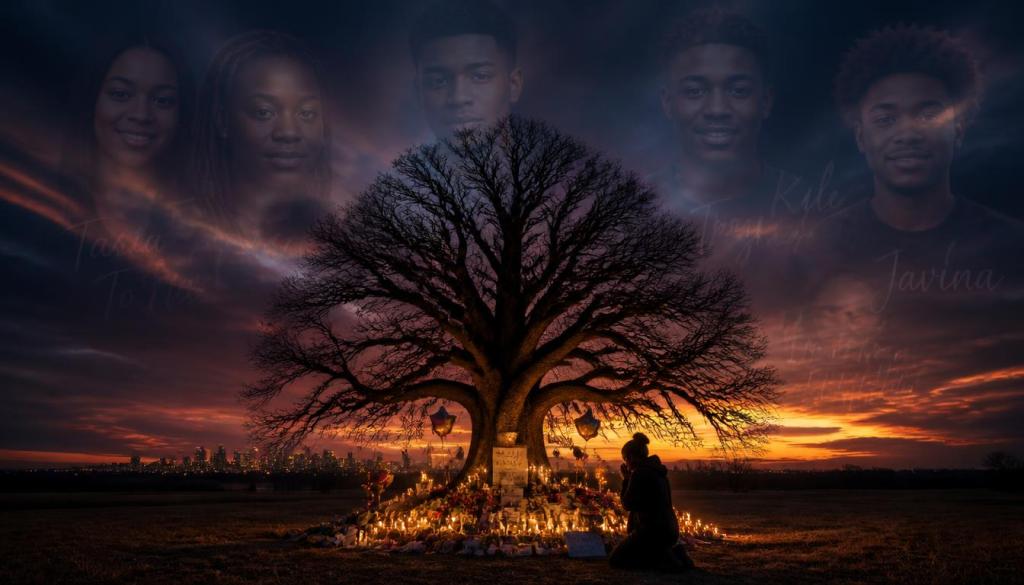
They are found in Jackson, Mississippi. In Miami, Florida. In Charlotte, North Carolina. In Marietta, Georgia. In Cleveland, Mississippi. Young Black women and men, discovered hanging from trees — in parks, near campuses, behind abandoned homes, outside churches. Their bodies are found, photographed, and quickly ruled suicides by local authorities. Their families are left in shock, demanding answers, begging for a truth that the system seems determined to deny.
Each case is treated as an isolated tragedy — a mental health crisis, a personal struggle, a solitary act of despair. But when you lay them side by side, a pattern emerges. A disturbing, undeniable pattern that forces a confrontation with America’s oldest and most brutal tradition: the use of terror, specifically public hanging, to control, intimidate, and eliminate Black people.
This is not a conspiracy theory. It is a statistical contradiction. It is a historical echo. It is a community’s trauma made visible, case after case, year after year.
Between 1877 and 1950, more than 4,000 Black people were lynched across 20 states. Public hanging was the weapon of choice — a spectacle designed to send a message to an entire community: your life is not your own. Your safety is not guaranteed. The system will not protect you.
And yet, in 2026, young Black bodies are still being found hanging from trees. Still being ruled suicides. Still being dismissed by authorities who seem to move faster to close cases than to open them.
These cases are not isolated tragedies. They form a pattern that forces a confrontation with America’s oldest and most brutal tradition: the use of terror, specifically public hanging, to control, intimidate, and eliminate Black people.
Tasia Fortune (August 2026)
On August 3, 2026, the body of Tasia Fortune, a 29-year-old Black woman and mother of four, was found hanging from a tree behind an abandoned home in Jackson, Mississippi. Jackson police officers responded to the home on Aug. 3 and discovered a body hanging in the backyard. Hinds County chief medical examiner investigator Jeremiah Howard later confirmed the identity as Fortune.
Her mother, Christy Spivey, told ABC News that she last saw her daughter on July 26. Fortune, a mother of four who had lived in Mississippi for more than 10 years, had traveled to Kentucky for a family reunion. Spivey described her daughter as a loving mother who was not behaving out of the ordinary.
“She did not do this to herself,” Spivey told the outlet. “I know my daughter, and she did not do this to herself” .
A man was questioned by investigators but was arrested on an unrelated charge of being a felon in possession of a firearm. Police have not indicated whether they consider Fortune’s death suspicious, saying only that they are actively working “to determine the circumstances surrounding the death”.
Jackson City Councilman Kenneth Stokes wrote a letter to Mississippi U.S. Attorney Baxter Kruger asking for assistance in the case, referring to Fortune as a “murder victim”. Fortune’s body is now in the custody of the Mississippi State Medical Examiner’s Office, where an autopsy will be conducted to determine the cause and manner of death.
To’Nea Nicole Miller (June 2026)
On June 18, 2026, To’Nea Nicole Miller, a 27-year-old Black woman from Flint, Michigan, was found hanging from a tree at Gwen Cherry Park in Miami, Florida — one day before Juneteenth.
The Miami-Dade Sheriff’s Office ruled her death “consistent with a suicide”. At a press conference on June 26, Major Vernon Williams stated: “Based on the evidence gathered, detectives have found no evidence that Ms Miller’s death was the result of foul play” .
Miller’s sister, Terri Miller, vehemently rejected that conclusion at a news conference with the Miami-Dade branch of the NAACP.
“If anybody knew my sister To’Nea Nicole, that’s the last thing she would do. She loved life too much” .
Miller’s aunt, Michele Howell, traveled to Miami to identify her niece’s body and told NBC6 that after speaking with the investigator and medical examiner, the family also believes Miller took her own life. However, other relatives remain skeptical.
Miller had reportedly come to Miami to celebrate Juneteenth, though her sister Terri said Miller had been in Miami since February and was not there just for Juneteenth. The case has drawn significant community attention under the hashtag #JusticeForTonea.
Juliana Nzita (May 2026)
On May 8, 2026, Juliana Nzita, a 16-year-old Black girl, was found hanging from a tree in a churchyard in North Charlotte, North Carolina. She had been reported missing three days earlier, on May 5.
The Charlotte-Mecklenburg Police Department ruled her death a suicide without conducting an autopsy and closed the case four days later. Police said they found no physical or forensic evidence of “foul play or external involvement” and believe Juliana’s death was suicide.
The family, who emigrated from the Congo, said she struggled with severe bullying at school. A GoFundMe page set up by her uncle described her smile as warm and her demeanor as gentle.
The Mecklenburg County Medical Examiner ruled Juliana’s death a suicide within three days. The Charlotte Mecklenburg Community Relations Committee invited police to discuss the investigation at its July meeting, with committee chair Samuel Smith Jr. saying the circumstances of the case raise concerns.
Police also rejected the Observer’s request to interview detectives or obtain their investigative file. The family has since requested an autopsy and hired an attorney.
Trey Reed (September 2025)
On September 15, 2025, Demartravion “Trey” Reed, a 21-year-old Black student at Delta State University in Mississippi, was found hanging from a tree near the campus pickleball courts.
The county coroner ruled his death a suicide. The Mississippi State Medical Examiner’s Office conducted an autopsy which found “the cause of death to be hanging and the manner of death as suicide”.
His family, represented by civil rights attorney Ben Crump, demanded transparency and an independent autopsy.
“I cannot accept vague conclusions when so many questions remain,” Crump said in a statement.
Crump is demanding that all video footage related to the death investigation be shown to the family. The family will commission its own independent autopsy to be paid for by the Autopsy Initiative, part of the Know Your Rights Camp organization founded by former NFL quarterback Colin Kaepernick.
Delta State University President Dan Ennis acknowledged that the circumstances of Reed’s death are especially troubling given the history of racial violence in the Jim Crow South. All investigative material was turned over to the FBI and the U.S. Attorney’s Office for review.
Kyle Bassinga (February 2026)
On February 18, 2026, Kyle Bassinga, a 21-year-old Black student at Georgia State University, was found hanging from a tree in Fair Oaks Park in Marietta, Georgia. He had been reported missing on Valentine’s Day.
Cobb County Police ruled his death a suicide, citing no evidence of foul play. Cobb County Chairwoman Lisa Cupid acknowledged the gravity of the manner of death, stating:
“Mr. Basinga is a young man of 21 years who was found in a horrific manner hanging from a tree. And this is a violent manner that has caused many to think of the days of slavery and of Jim Crow, and this type of violence shown towards African Americans, particularly men” .
Cobb County Police Chief Dan Ferrell said detectives reviewed surveillance video and spoke with witnesses, and those accounts indicate Bassinga entered the wooded area alone. The Cobb County Medical Examiner’s Office is conducting an autopsy and toxicology testing.
Civil rights activist Gerald Rose discussed the case, calling for scrutiny in Bassinga’s death. Leaders with the New Order National Human Rights Organization said they plan to address Cobb County commissioners.
Javion McGee (September 2024)
On September 11, 2024, Javion McGee, a 21-year-old Black truck driver from Illinois, was found dead in Henderson, North Carolina, seated against a tree with a rope around his neck. Detectives found him under a tree with the rope around his neck.
A state autopsy determined that McGee died by suicide, with the cause of death listed as hanging. The Vance County Sheriff’s Office said there were no signs of foul play.
His family, represented by attorneys Harry Daniels and Lee Merritt, demanded answers and transparency.
“This is an absolute tragedy no matter how it panned out. The facts are still working their way out, but we do know that he was found hanging from a tree” .
According to the sheriff’s office, surveillance footage shows McGee purchasing rope at a Walmart the evening before his death and walking alone toward a line of trees. His truck was found unlocked with his wallet and cell phone inside, along with a Walmart receipt for the rope. Despite this evidence, the family and their lawyers felt the conclusion might be premature.
The Statistical Contradiction
The core of the outrage lies in a stark statistical contradiction. According to the CDC, Black Americans are the least likely demographic group to die by suicide using hanging or suffocation. The method of death is statistically rare for the demographic most affected, making any public hanging inherently suspicious and demanding rigorous investigation.
A 2026 report, A Crimson Record, documented over 70 suspected modern-day lynchings across seven Southern states between 2000 and 2025. In many instances, cases are initially ruled suicides, a pattern widely observed in reporting on Trey Reed.
The Historical Echo
These deaths do not occur in a historical vacuum. Between 1877 and 1950, more than 4,000 Black people were lynched across 20 states. Lynching was used as an instrument of terror and intimidation — to kill human beings in order to sow deeper fear, inequality, and injustice for generations.
For many in the Black community, a body found hanging from a public tree carries a specific, traumatic weight that cannot be separated from this history. Delta State University President Dan Ennis acknowledged this, stating that he understands why the circumstances of Reed’s death are especially troubling given the history of racial violence in the Jim Crow South.
The Wisdom to Be Gained
This grim pattern offers hard-won lessons.
Trust is not given; it is earned. The families in these cases have not been given a reason to trust the official rulings. They are demanding transparency because they have been shown, time and again, that the system is not always willing to provide it.
History is never truly past. The choice of a public tree as the location for a death is not random. It evokes a century of racial terror that has not been fully reckoned with.
The rush to judgment is a form of injustice. Police closed Juliana Nzita’s case in four days without an autopsy. The medical examiner ruled To’Nea Miller’s death a suicide within 24 hours. When the system moves this quickly, it often moves past the truth.
Silence is complicity. In Charlotte, police rejected the Observer’s request to interview detectives and obtain investigative files. When institutions refuse to be transparent, they fuel the very distrust they claim to want to dispel.
The work is far from finished. The report A Crimson Record documented over 70 suspected modern-day lynchings across seven Southern states between 2000 and 2025. The statistical contradiction is clear. The historical weight is undeniable. The response must be to demand accountability and transparency.
Sources
Tasia Fortune (August 2026)
- AP News: What we know about the death of Tasia Fortune in Mississippi (August 10, 2026)
- CNN: A Black woman was found hanging from a tree in Mississippi. Here’s what we know (August 11, 2026)
- NBC News: Person of interest questioned after Mississippi woman found hanging from a tree (August 10, 2026)
- WLBT: Human Rights group urges for transparency in Tasia Fortune hanging death (August 18, 2026)
- The Mirror: Black woman, 29, found hanging from tree behind abandoned home (August 7, 2026)
To’Nea Nicole Miller (June 2026)
- Snopes: Investigating claim that Black woman Tonea Miller was lynched in Miami ahead of Juneteenth (June 26, 2026)
- Daily Mail: Young woman who ‘loved life’ is mysteriously found dead near Miami park… as sister slams cops (June 30, 2026)
- OrganizeFor: Community Letter of Support for Justice for Tonea Nicole Miller (August 1, 2026)
Juliana Nzita (May 2026)
- WBTV: Community relations committee questions CMPD’s investigation into death of 16-year-old found hanging at Charlotte church (July 31, 2026)
- Herald Online: Juliana Nzita update: The latest on what we know about Charlotte teen’s hanging (July 30, 2026)
- Charlotte Observer: These are the 911 calls in the Juliana Nzita hanging death case (July 27, 2026)
- Tri-City Herald: A Black teen found hanged near Charlotte church was a suicide, police say. Questions remain (July 22, 2026)
Trey Reed (September 2025)
- CNN: Death of Mississippi university student found hanging on campus ruled a suicide – but family raises questions (September 17, 2025)
- Reuters: Autopsy rules death of Black man found hanging from tree in Mississippi as suicide, police say (September 19, 2025)
- Congressman Bennie Thompson: Thompson Calls for Federal Investigation into Death of Delta State University Student (September 16, 2025)
Kyle Bassinga (February 2026)
- FOX5 Atlanta: Vigil held for young man found dead in Marietta’s Fair Oaks Park (February 24, 2026)
- NewsBreak: The Silence of the Branches Returns — Now Six (February 23, 2026)
- NewsBreak: Civil Rights Leader Gerald Rose Calls for Scrutiny in Cobb County Death of Kyle Bassinga (February 28, 2026)
Javion McGee (September 2024)
- AP News: Family of man found dead with a rope around neck demands answers; sheriff says no foul play detected (September 18, 2024)
- WRAL: 21-year-old man found hanging from Vance County tree died by suicide, autopsy reveals (May 7, 2025)
- Charlotte Observer: Medical examiner says NC hanging death was suicide, with no sign of foul play (May 8, 2025)
Pattern and Historical Context
- Emerald Book: The Alarming Rise of Black People Found Hanging but Ruled as Suicides (August 15, 2026)
- SA Observer: New Report Finds More Than 70 Suspected Modern-Day Lynchings Since 2000 (February 21, 2026)
- Equal Justice Initiative: Lynching in America
The People’s Blog — urban intel from a holistic social approach.
[ai]
 The People's Weekly
Leave a comment