Technology & Innovation — Listen Free 🎧 | Contact 📧
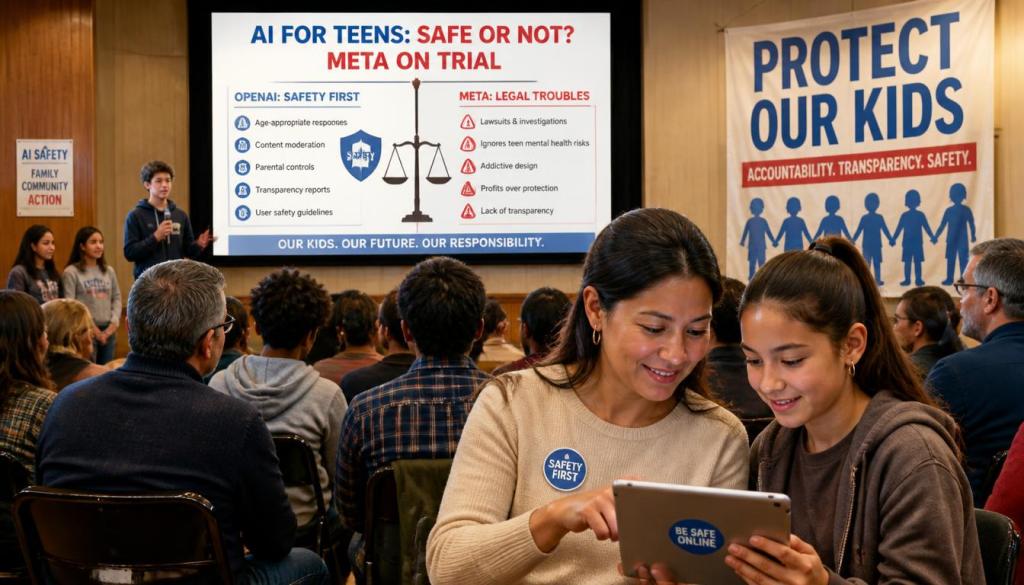
On the same day Meta went to trial over accusations that it deliberately addicted children to its platforms, OpenAI launched ChatGPT for Teens — a dedicated version of its AI chatbot designed for users aged 13 to 17 with stronger safety protections and learning-focused features .
The timing was not lost on observers. As Meta faces potentially billions in penalties and court-ordered changes to Instagram and Facebook, OpenAI is positioning itself as the safer alternative for young users .
ChatGPT for Teens: What’s Different
Users whose accounts indicate they are under 18, or whom OpenAI’s age-estimation system identifies as likely minors, will automatically be placed into the teen experience . The company uses roughly 2,000 signals — including chat content and times of day — to estimate user ages .
Learning Features:
- Study Mode: Guides students through problems using guiding questions and step-by-step scaffolding instead of providing direct answers
- Homework Reminders: Can recognize when a teen appears to be trying to shortcut an assignment and redirect them toward Study Mode
- Study Hours: Teens or parents can set times when Study Mode is enabled by default
- Quizzes and Learning Visualizations: Help students practice and understand difficult concepts
Safety Features:
- Age-Appropriate Safeguards: Restrictions on content related to self-harm, violence, eating disorders, dangerous activities, and explicit sexual or graphic content
- Break Reminders: Prompts to take a break after spending 90 minutes on the platform within a three-hour period
- Parental Controls: Linked parents can set “Quiet Hours,” manage settings, and receive safety notifications in high-risk scenarios
- Eating Disorder Notifications: OpenAI is adding notifications related to eating disorders, with each alert reviewed by a human before being sent to parents
What ChatGPT for Teens Won’t Do:
- No Romantic or Sexualized Roleplay: The chatbot is prohibited from using romantic language, encouraging emotional dependence, or implying it has feelings or consciousness
- No Direct Answers: Study Mode is designed to help students learn, not cheat
OpenAI Vice President of Global Policy Ann O’Leary put it this way: “We want to treat teens like teens, which means that we have to make sure that we’re showing up with the right developmental stage when we’re not either talking down to them or treating them like kids, but we’re also making sure that they’re not exposed to material that they shouldn’t be exposed to” .
Meta on Trial: The Child Safety Reckoning
As OpenAI rolled out its teen-focused product, a federal trial began in Oakland, California, where 29 U.S. states are suing Meta over claims that Facebook and Instagram were designed to addict children and harm their mental health .
The States’ Case:
- Meta’s business model was to “hook the users, hold them for as long as they can, harvest their data, and then hide the truth from the public,” said California Deputy Attorney General Megan O’Neill
- “It worked especially well for kids,” O’Neill added
- Internal emails show that “teen time spent” was the goal, and Meta employees viewed Instagram as a “drug” and themselves as “pushers”
- Meta is accused of violating federal law by improperly collecting and using children’s personal data
What’s at Stake:
- Penalties: Meta faces penalties that could range from $200 billion to $1.4 trillion — the high end approaching the company’s entire market value
- Structural Changes: States want Meta to implement age restrictions, eliminate infinite scroll, and make other changes to its platforms
- Key Witnesses: Meta CEO Mark Zuckerberg and Instagram head Adam Mosseri are expected to testify
Meta’s Defense:
- The company has made a “huge effort” to keep kids safe online
- Research shows no clear link between adolescents’ social media use and a lack of well-being
- The penalties sought are “excessive” and could threaten the company’s existence
The Bigger Picture
OpenAI’s launch of ChatGPT for Teens comes as both companies face mounting legal and regulatory pressure over child safety:
- OpenAI is facing lawsuits from families who allege that ChatGPT contributed to the deaths or injuries of young people, including a California teen who died by suicide
- Meta has already suffered significant defeats this year, including a $942 million judgment in New Mexico over child safety violations
- Over 1,000 U.S. school districts have filed suits against social media companies over student anxiety, depression, and self-harm
The contrast between the two companies’ approaches couldn’t be starker: Meta is in court over decades of alleged harm to children. OpenAI is rolling out safety features before its teen user base expands .
The Bottom Line
OpenAI is betting that the future of AI depends on trust — and that trust starts with safety. ChatGPT for Teens represents a deliberate effort to get ahead of the regulatory and legal scrutiny that has engulfed Meta and other social media platforms.
For urban families, the message is clear: AI is coming to your children’s lives whether you’re ready or not. The question is whether the companies building it will prioritize safety — or wait until the courts force them to.
The Guardian: “OpenAI targets younger users with ChatGPT for Teens as Meta heads to court over child safety” (August 19, 2026)
The Wall Street Journal: “ChatGPT Teen Version to Show Less Romantic Roleplay, More Math Help” (August 19, 2026)
WPXI: “Meta set to face trial over allegations it designed platforms to addict kids” (August 19, 2026)
The Verge: “Meta’s child safety trial begins with a damning opening statement” (August 19, 2026)
Bloomberg Law: “States Lay Out ‘Devastating’ Meta Case at Start of Trial” (August 19, 2026)
ABC News: “Meta’s child safety trial begins as opening statements get underway” (August 19, 2026)
The Verge: “Meta’s child safety trial begins with a damning opening statement” (August 19, 2026)
The People’s Weekly — urban intel from a holistic social approach.
[ai]
 The People's Weekly
Leave a comment